
Posting on social media has become routine for many business owners. You show up consistently, publish content, and stay active because that’s what you believe drives growth.
But consistency alone isn’t producing results anymore.
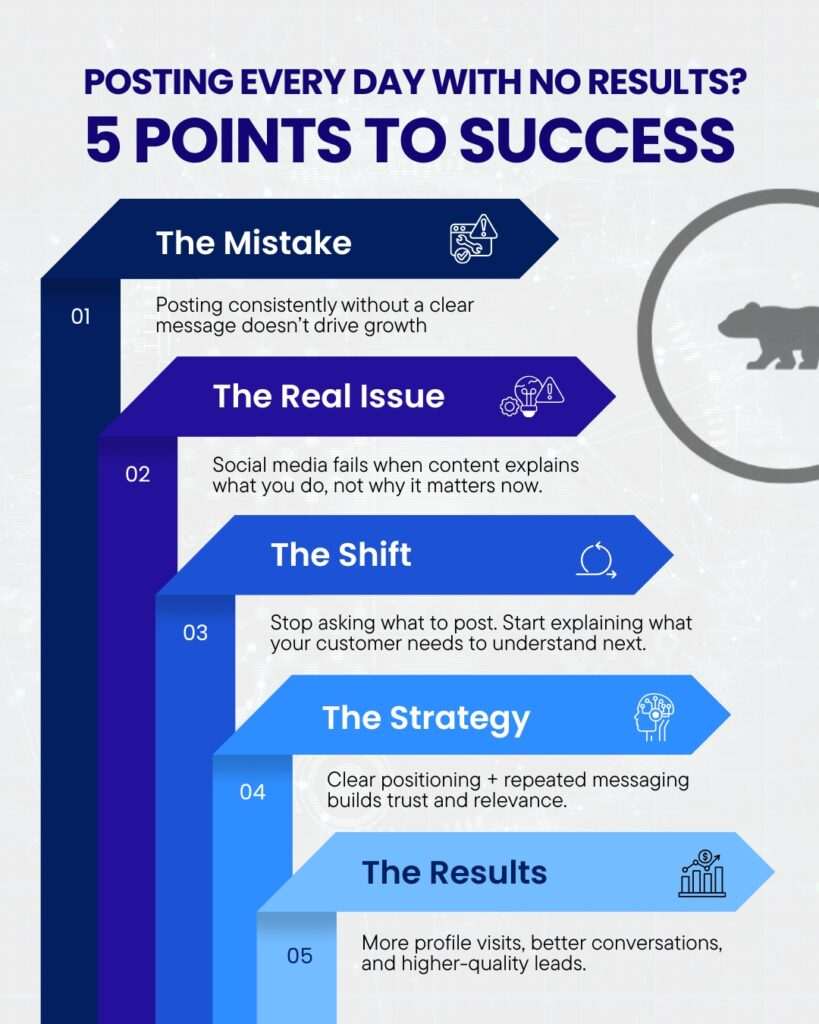
If you’re posting every day and still not seeing leads, conversations, or meaningful engagement, the problem usually isn’t effort; it’s direction.
What used to work quietly stopped working. Many businesses just didn’t notice when it happened. Social media marketing San Diego businesses rely on today operates under different rules than it did even a few years ago.
What Most Businesses Miss About Social Media Performance
A lack of results rarely means social media “doesn’t work.” It usually means the strategy is outdated.
We regularly review accounts that are active, polished, and consistent, yet disconnected from real business outcomes. The content exists, but it isn’t guiding anyone toward a decision. Posts are created to fill space instead of serving a purpose.
Here’s what many business owners don’t realize:
- You can post every day and still confuse your audience.
- You can get engagement without building trust.
- You can follow trends and still attract the wrong people.
Social media marketing rewards clarity over activity. If your content doesn’t clearly communicate who you help, what problem you solve, and why it matters now, it blends into the feed.
Why Engagement Feels Unpredictable
Low engagement often gets blamed on algorithms, but that explanation is incomplete.
Algorithms respond to customer behavior. Behavior responds to relevance.
Most content underperforms because it speaks generally instead of specifically. It explains what a service is without addressing why someone should care right now. It educates without connecting the information to a real decision the buyer is facing.
At Little Big Marketing, we see engagement improve when posts are framed around real customer hesitation. Pricing concerns. Timing doubts. Comparison questions. These are the moments when people pause and read.
Social media marketing succeeds with content that mirrors the internal conversation their audience is already having.
The Shift That Changes Everything
At some point, every effective strategy makes the same shift.
You stop asking, “What should we post today?”
You start asking, “What does our customer need to understand next?”
This change reframes social media from a content machine into a communication tool. Instead of broadcasting updates, you’re guiding understanding. One post explains cost. Another clarifies process. Another removes fear around making the wrong choice.
Over time, this builds momentum.
Social media marketing strategies work best when they reduce uncertainty step by step, not when they try to sell all at once.
What a Smarter Social Media Strategy Looks Like
A smarter strategy doesn’t feel frantic. It feels intentional.
It starts with positioning. When someone lands on your profile, they should quickly understand who you serve and why your perspective is credible. Without that foundation, even strong content struggles to convert attention into trust.
From there, content follows a few clear themes rather than chasing variety for its own sake. Education that removes confusion. Proof that shows experience. Insight that explains how you think. It may feel repetitive to you, but to your audience, it creates clarity.
Social media marketing San Diego businesses benefit from consistency that reinforces understanding, not novelty that resets expectations every week.
How Much to Pay for Social Media Marketing
Cost is one of the most common questions we hear, and it’s also one of the most misunderstood.
Social media marketing isn’t a fixed service. Pricing reflects what role social media plays in your business. Is it just maintaining visibility, or is it supporting lead generation and sales conversations?
In the San Diego market, basic management often falls between $800 and $1,500 per month, typically covering posting and scheduling. More strategic social media marketing usually ranges from $1,500 to $3,000 per month, where messaging, positioning, and performance are actively shaped. Higher investments often include advertising and conversion-focused strategy.
Social media marketing San Diego companies see the strongest return when cost aligns with outcomes, not output.
Why Managing Social Media Yourself Eventually Becomes a Bottleneck
Most business owners start by handling social media in-house. It feels efficient and logical. Over time, though, proximity becomes a disadvantage.
You’re too close to the business to see where clarity is missing. What feels obvious to you often still needs explanation for your audience. Messaging becomes repetitive or vague without anyone realizing it.
At Little Big Marketing, we often find that small shifts in framing unlock better results. Posts that explain rather than promote. Content that answers questions before they’re asked. Social media marketing San Diego businesses trust grows when content helps people think more clearly, not just notice your brand.
What Results Actually Matter
Likes and followers are visible, but they’re not reliable indicators of progress.
More telling signals include profile visits, website clicks, direct messages, and how informed people are when they reach out. These actions show whether your content is influencing decisions.
Ask yourself whether prospects reference your posts or arrive with clearer expectations. When that happens, social media is doing its job.
Social media marketing San Diego strategies succeed when they support real conversations, not just surface-level engagement.
A Better Way to Think About Social Media
Social media isn’t about posting every day. It’s about building understanding over time.
When your content consistently helps people clarify their choices, trust builds naturally. Results feel less random. Effort starts to compound instead of reset.
A smarter approach to social media marketing San Diego businesses need today is rooted in clarity, intention, and perspective. When strategy replaces guesswork, social media stops being a frustration and starts becoming a business asset.