
Choosing the right marketing channels can feel overwhelming. Your business has dozens of options, from search engine optimization (SEO) and paid advertising to social media and content marketing. Investing in the wrong channel can waste both time and money.
A digital marketing agency doesn’t recommend the same strategy for every client. Instead, it evaluates your goals, audience, competition, and budget to create a marketing plan that delivers measurable results.
Choosing the Right Marketing Channels Matters
Not every marketing channel works equally well for every business because customer behavior varies across industries. Choosing channels based on how your customers search and buy helps you maximize your marketing budget.
Choosing the right channels helps you:
- Reach customers where they already spend time.
- Increase qualified leads instead of random traffic.
- Improve your return on investment (ROI).
- Build a sustainable marketing strategy.
This is especially important as businesses continue increasing their digital advertising efforts. According to DataReportal, search advertising accounted for 40% of global digital advertising spend in 2024, making it the largest digital advertising channel worldwide. While search marketing is valuable, it isn’t automatically the right first investment for every business.
Evaluating a Business Before Recommending Channels
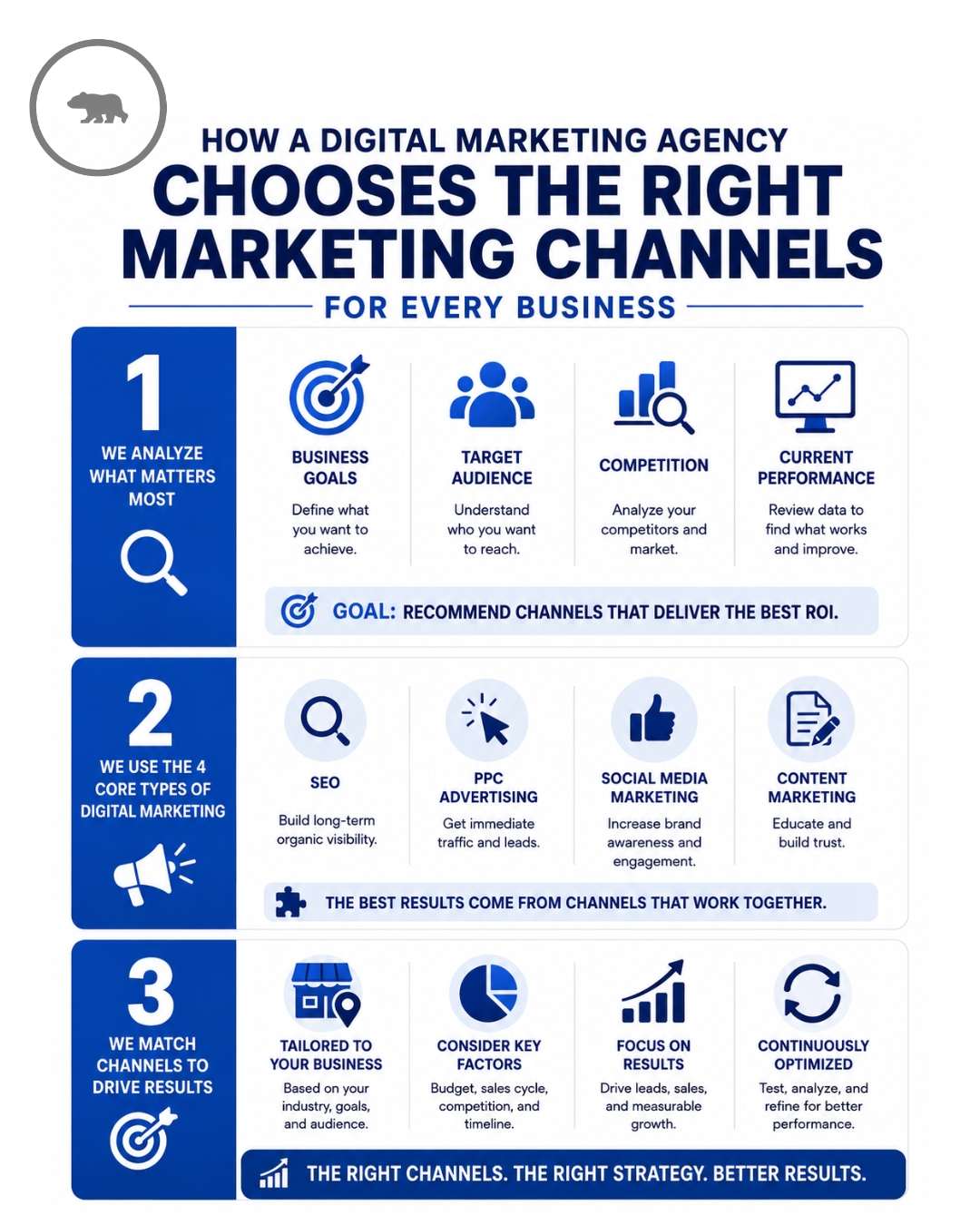
Every successful marketing strategy starts with understanding the business behind it. Before recommending any marketing channels, a digital marketing agency evaluates several factors to build a strategy that aligns with your goals and delivers measurable results.
1. Business Goals
Your business goals shape every marketing decision. Whether you want to generate more leads, increase online sales, build brand awareness, or improve customer retention, each objective requires a different mix of marketing channels. Defining clear goals helps an agency prioritize strategies that support your desired outcomes instead of spreading your budget too thin.
2. Target Audience
Knowing your audience is just as important as knowing your goals. A digital marketing agency studies who your customers are, how they search for products or services, the platforms they use most, and what influences their buying decisions. This information helps identify the channels most likely to connect your business with qualified prospects.
3. Competitive Analysis
Looking at your competitors provides valuable context for your marketing strategy. An agency reviews their search rankings, advertising efforts, website content, and social media activity to understand where they perform well and where opportunities exist. These insights help uncover gaps that your business can use to gain a competitive advantage.
4. Current Marketing Performance
Your existing marketing data provides a clear starting point for improvement. By reviewing website traffic, conversion rates, search rankings, advertising performance, and audience engagement, a digital marketing agency can identify which strategies are already producing results and which areas need adjustment.
What Are the 4 Types of Digital Marketing?
Digital marketing includes many platforms and tactics, but they generally fall into four core categories. Understanding these categories helps you see how different marketing efforts work together to attract, engage, and convert potential customers.
1. Search Engine Optimization (SEO)
SEO focuses on improving your website’s visibility in organic search results. It helps businesses attract people who are actively searching for products, services, or information without paying for each click. While it takes time to build momentum, SEO supports long-term growth by driving consistent, high-intent traffic.
2. Pay-Per-Click (PPC) Advertising
PPC is a form of paid digital advertising that places your business in front of potential customers almost immediately. It allows businesses to target specific audiences based on factors such as search intent, interests, or online behavior, making it a flexible option for generating leads and increasing visibility.
3. Social Media Marketing
Social media marketing uses social networking platforms to build brand awareness, engage audiences, and encourage customer interaction. Businesses can share educational content, promote products or services, and foster relationships with their audience while reaching both existing and potential customers.
4. Content Marketing
Content marketing involves creating valuable and relevant content that helps customers solve problems or answer questions throughout their buying journey. This includes blogs, videos, guides, infographics, and other educational resources that build trust, establish authority, and support other digital marketing efforts.
Matching Marketing Channels to Different Businesses
To build an effective strategy, a digital marketing agency follows a structured process that evaluates your business before selecting the channels most likely to reach your audience, support your goals, and maximize your marketing investment.
Step 1: Identify How Customers Search
The first step is understanding how potential customers look for products or services. Local service businesses often depend on location-based searches, while eCommerce customers may discover products through search, social platforms, or online ads.
Step 2: Consider the Length of the Buying Process
Some customers make decisions quickly, while others need more time and information. B2B companies and professional service providers often have longer sales cycles, so educational content, email nurturing, and search visibility can help build trust before a prospect is ready to act.
Step 3: Match Channels to the Business Model
A local service company may benefit from local search optimization, paid search, and business listing management because customers usually want nearby help. An eCommerce business may use product-focused SEO, shopping campaigns, email marketing, and paid social media to attract shoppers and encourage repeat purchases.
Step 4: Review Budget and Resources
The right strategy must also fit the available budget, team capacity, and timeline. Paid campaigns can create faster visibility, while SEO and content marketing often require more time but can support steady long-term growth.
Step 5: Combine Channels That Support Each Other
A digital marketing agency rarely relies on one tactic alone. Instead, it may use SEO to attract traffic, content to educate visitors, paid advertising to reach high-intent prospects, and email marketing to nurture leads until they are ready to convert.
Other Factors That Influence Channel Selection
Beyond business type, several practical considerations affect channel recommendations.
Budget determines how aggressively a business can invest in paid advertising while still supporting long-term efforts like SEO.
Sales cycle also matters. Businesses with longer buying journeys often require educational content and email marketing before customers are ready to purchase.
Competition influences strategy as well. Highly competitive industries usually require a mix of organic and paid marketing to remain visible.
Finally, expected timelines shape recommendations. PPC can generate traffic quickly, while SEO and content marketing typically build momentum over several months.
Build a Smarter Marketing Strategy with Little Big Marketing
Choosing the right marketing channels shouldn’t be a guessing game. At Little Big Marketing, we create customized digital marketing strategies based on your business goals, audience, and budget, so every marketing dollar works harder for your business.
Contact us to discover which marketing channels can help you attract more customers and achieve sustainable growth.